★ America Turns 250 · DC Keeps Organizing

DC Statehood and Voting Rights:
A Plain-English History

How 700,000 Americans ended up without a vote in Congress, the rights DC residents have already won back, and the legal case Capital Rights Lab is building now.

700,000
DC Residents
Zero Senate Votes
U.S. Census · 2024
$45B
Federal Taxes Paid
More Than 26 States
IRS Data Book Table 5 · FY 2024
86%
DC Voters Who Approved
Statehood in 2016 Referendum
DC Board of Elections · 2016
The Basic Fact

DC residents pay every federal tax.
They have no vote in Congress.

Washington, DC is a federal district, not a state. The framers created it so that the seat of government would not sit inside any single state and depend on that state's protection. That was a reasonable design choice for a capital that was mostly empty land.

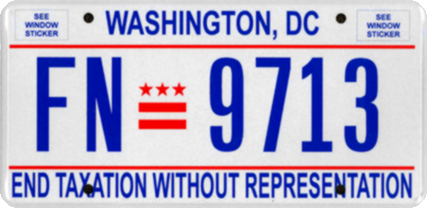
What the framers did not plan for is the city that grew up on top of it. Today more than 700,000 people live in DC permanently (U.S. Census). They pay federal income tax, payroll tax, Medicare, and Social Security. They serve on federal juries. They are drafted in every war. And they have no senators and no voting member of the House. The District has a single non-voting delegate — a member who can speak on the floor but cannot cast a recorded vote.

DC sends roughly $45 billion to the federal government each year — more than 26 states, including the combined total of Vermont, Wyoming, Alaska, North Dakota, and South Dakota (IRS Data Book, FY 2024). No other established democracy treats the residents of its capital this way.

★ Taxes paid
$45B per year
More than 26 of the 50 states — including the combined total of Vermont, Wyoming, Alaska, North Dakota, and South Dakota.
IRS Data Book · Table 5 · FY 2024
★ Voting representation
0 votes
Zero senators. Zero voting House members. One non-voting delegate who can speak but cannot vote.
U.S. Constitution · Art. I, § 8, cl. 17

How It Happened

The disenfranchisement was an act of Congress,
not a fact of nature.

In 1801, Congress passed the Organic Act, transferring jurisdiction over the new District from Maryland and Virginia to the federal government. DC residents had been voting as citizens of those states since the founding. After the transfer, they were not.

For the first sixty years, the city was small. Then DC grew up. By 1950 more than 800,000 people lived in the District (U.S. Census Bureau). They were families, homeowners, teachers, civil servants, and workers who had made DC their permanent home. They were not passing through. And they still had no vote.

The pattern that emerges from the historical record is consistent: every time DC residents pushed for representation, they got something. Not everything they asked for, but something. The progression from 1801 to today is not accidental — it is the result of organized residents winning concrete things that were, in their moment, considered politically dead.

"The people of the District of Columbia are not second-class citizens. They are as much a part of this nation as the residents of any state." — President John F. Kennedy, 1961, on ratification of the 23rd Amendment

DC Has Won Before

Every right DC has, DC organized for.
Each was called impossible before it happened.

This is the part most national press leaves out. The history of DC voting rights is not a story of waiting. It is a story of organized residents winning concrete things, again and again, over more than two centuries.

The lesson is not subtle. DC residents have organized before. They have won before. And the work is continuing.


Get updates on the campaign.

Capital Rights Lab works on public advocacy, organizing, and legal strategy for DC representation. If you want updates as the work develops, leave your email.


America 250

In 2026, America turns 250. The principle of consent of the governed is still not fully applied inside its own capital.

The Declaration of Independence declares governments derive "their just powers from the consent of the governed." The America 250 commemoration will play out across Washington, DC. Heads of state will join fireworks on the Mall. The Declaration will be read aloud at the Capitol. And 700,000 of the people who live and work in that city will still have no senator.

This is not a DC problem. It is an American problem. The credibility of American democracy abroad — and the integrity of its self-image at home — rests in part on whether the country applies its founding principles inside its own capital. Anniversaries focus attention, and attention is what unfinished business has always needed.


The Legal Argument

Statehood is the cleanest fix.
It is not the only one.

Full statehood — two senators, a voting House member — is the cleanest answer to a question that has been open since 1801. It is also a long fight that ultimately runs through the Senate.

In the meantime, much of what DC residents experience as federal overreach is not required by the Constitution at all. It is the product of ordinary statutes Congress passed and federal agencies that have grown into the gaps. The District Clause gives Congress authority over DC as the seat of the federal government — federal buildings, congressional security, the physical infrastructure of national government. It does not, by its own terms, require Congress to govern DC as a municipality: running the city's schools, deciding its zoning, prosecuting its local misdemeanors, or overriding its elected council.

Capital Rights Lab is building the legal case that those two things — legitimate federal authority over the seat of government, and unconstitutional federal overreach into DC's municipal life — can and should be separated. Recent Supreme Court decisions have opened new legal pathways to that argument that have never been applied to DC's situation. The doctrinal ground has not been tested in the post-2020 era. That is what the Lab is testing.


The Path Forward

What you can do.

Statehood requires both chambers. H.R. 51 has passed the House twice. It has never received a Senate floor vote. Neither chamber's majority is permanent, so the count in both matters every Congress. Right now, 199 representatives cosponsor H.R. 51 and 43 senators cosponsor S. 51 (League of Women Voters DC). That gap is real, but it is the kind of gap movements close — with sustained pressure from constituents who keep showing up.

Every member of Congress has constituents who pay federal taxes and expect a vote. Telling your representative and your senators where you stand, clearly and by name, is the most useful thing any American who agrees with this case can do.

That is what the petition is for. It is not symbolic. It is a count. Every signature is a constituent on the public record. That record will make the next opening possible.


Further Reading

Sources and background

★ The Fifty-First Campaign

700,000 people. Zero Senate votes.
A movement that has won before.

It takes about a minute to go on the record. Add your name.

★ Sign the Petition

Follow the campaign.

Updates from Capital Rights Lab on advocacy, organizing, and legal strategy for DC representation.